How to Choose the Best Dumbbell Set for Your Gym
Choosing the best Dumbbell Set for a gym is not just a price comparison. It affects workout flow, storage, progression, and how confidently members train. A rack of fixed dumbbells offers quick changes between exercises. Adjustable models save floor space, though changing plates can interrupt a busy session. Neither option suits every gym.
Strength coach Mike Boyle’s relevant advice, paraphrased, is simple: choose equipment around the athlete and the training task. That principle helps focus the decision. Consider who will use the weights, how often they will be handled, and which exercises the gym supports. Check the weight range and increments; small jumps can matter when users are building strength gradually. Feel the handles, too. A secure grip and comfortable knurling may seem minor until a set gets sweaty.
Space matters. So does upkeep. Measure the rack area, inspect coatings and welds, and confirm replacement or warranty details with the supplier. For a small studio, compact adjustable dumbbells may be practical. In a high-traffic facility, sturdy fixed weights can be easier to share and return between sets. Still, no specification sheet can tell you how a handle feels in your hand. Try samples when possible. I would not choose by appearance alone; that is an easy mistake. This guide compares set types, materials, weight ranges, ergonomics, storage, and budget, so gym owners can weigh convenience against durability before buying.
Assess Your Gym’s Training Needs and Available Space
Before buying dumbbells, map the training your gym actually offers. A small personal-training room may need adjustable pairs and one sturdy rack. A busy strength area may need fixed pairs in several increments, with clear access between benches. The Health & Fitness Association’s 2024 U.S. Health & Fitness Consumer Report counted 72.9 million Americans as fitness-facility members in 2023. That broad demand is a useful reminder: equipment should match your members, not an imagined average.
Measure the usable floor, not just the room’s footprint. Mark doors, walkways, benches, and storage on a simple plan. Keep the rack away from traffic, and leave enough room for a lifter to pick up and set down weights without twisting around others. The ACSM’s 2024 Worldwide Survey of Fitness Trends includes strength training among the field’s tracked programming areas. For a practical choice, list the exercises your coaches teach, the weights members need, and how many people train at peak times. Then compare that list with available rack space.
Leave room to adjust. Member preferences change, and the heaviest pairs may gather dust while lighter weights disappear from the rack. I have seen tidy layouts fail once two classes overlap. It’s easy to miss. Trial a smaller range, track which pairs are used, and expand where demand is real. Don’t let a clean floor plan outrank safe, comfortable movement.
Compare Dumbbell Types and Weight-Range Options
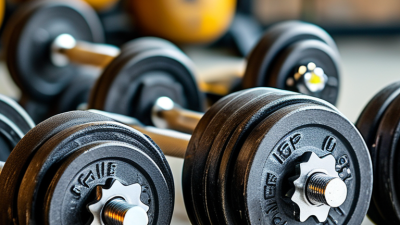
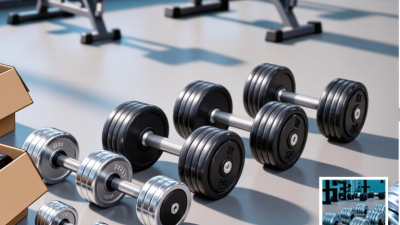
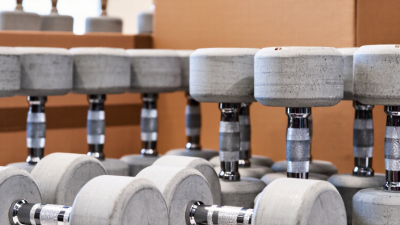
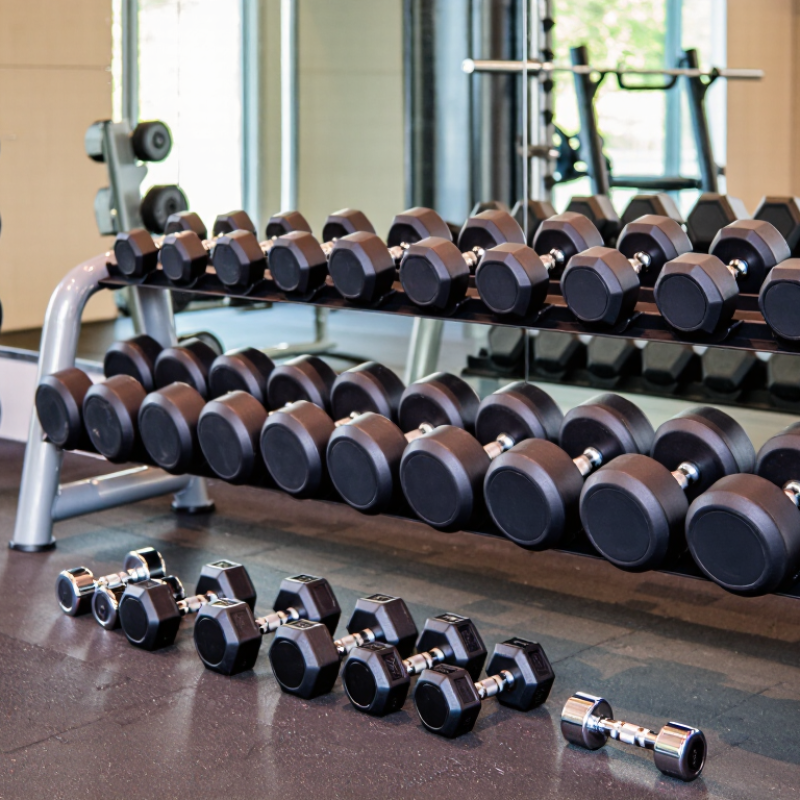
Fixed dumbbells are simple, sturdy, and ready for quick changes between exercises. Hex-shaped models resist rolling across the floor, while coated handles may feel more comfortable during longer sessions. The trade-off is space: a full range needs a rack and a clear footprint. Fit matters. Measure the spot before buying, including room to pick up each weight safely.
Adjustable sets save space, but their mechanisms differ. Spin-lock designs use threaded collars and weight plates; they are often less expensive, though changing loads takes longer. Selector-style sets allow faster changes, but check that the locking system engages securely and that the handle feels balanced. Not always. A compact set can still feel awkward in the hand, so try the grip if possible.
Choose a weight range around the exercises you actually perform. For presses and rows, many people need heavier options than for raises or curls. A set that changes in small increments can make progression steadier, while a low maximum may limit stronger users over time. One easy mistake is focusing only on the heaviest setting. Check the lightest weight, increments, total range, and storage needs too. If several people will share the set, their needs may differ more than expected.
Evaluate Materials, Grip Design, and Build Quality
A dumbbell’s material affects its feel, durability, and the floor beneath it. Cast iron is compact and sturdy, but bare surfaces can rust in damp rooms. Rubber-coated heads may reduce noise and protect flooring, though their coating can wear after repeated drops. Check the edges for peeling and the head for uneven seams. A slight odor is common with some coatings, but a strong smell that lingers deserves attention. No finish is perfect.
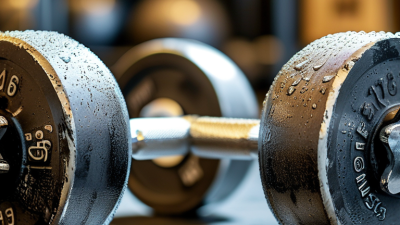
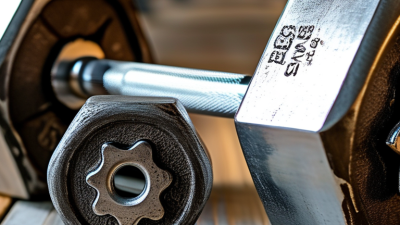
Grip design matters during sweaty sets. Look for a handle that feels secure without digging sharply into your palm. Knurling, the small textured pattern on metal, can improve control; overly aggressive grooves may irritate skin. Fit matters. Hold a sample, if possible, and notice whether your fingers wrap comfortably around the handle. Then inspect how each head joins the handle. Welds or molded connections should look even, with no visible gaps or wobble. For an adjustable set, check that collars lock firmly and move smoothly. A rushed inspection can miss small flaws. I would also recheck the hardware after early workouts, since new equipment can settle with use.
Match the Set to Your Budget and Storage Requirements
A dumbbell set should fit both your budget and the space you actually have. ACSM’s 2025 Worldwide Fitness Trends survey ranked traditional strength training fifth among 45 trends, signaling strong interest in resistance training. But a popular workout does not require a room full of weights. Start with the exercises you plan to do, then choose a usable weight range. A pair of fixed dumbbells costs less upfront, but several pairs can quickly crowd a small apartment. Adjustable dumbbells save floor space, though the locking mechanism may feel awkward during quick weight changes.
Measure before buying. Allow room for a bench, safe movement, and the dumbbells’ full footprint—not just the rack. For a tight budget, begin with a few weights that support your current routine, then add heavier pairs as your strength grows. Check the cost of expansion: some adjustable sets require extra plates, while fixed weights need more storage as the range grows. Prices vary widely, so compare the total cost, including a rack or delivery. A bargain can become expensive.
Think about daily use, too. If you will move the set between rooms, compact pieces are easier to carry. If it will stay in one place, a sturdy rack keeps handles off the floor. Measure twice. I once underestimated the clearance needed beside a bench; the set fit, but the workout felt cramped. It is a small detail, and an easy one to overlook.
How to Choose the Best Dumbbell Set for Your Gym - Match the Set to Your Budget and Storage Requirements
| Set type |
Typical weight range |
Approx. set cost (USD) |
Approx. storage space |
Ease of changing weights |
Best suited to |
| Compact adjustable set |
About 5–50 lb per dumbbell |
$300–$700 per pair |
About 2–3 sq ft, including a small stand |
Fast; dial or selector systems can change loads in seconds |
Small home gyms prioritizing a wide weight range in little space |
| Plate-loaded adjustable set |
About 5–50 lb per dumbbell, depending on included plates |
$100–$300 per pair |
About 2–4 sq ft for handles, plates, and a storage tray |
Slower; collars and plates must be changed by hand |
Budget-conscious users who do not mind longer weight changes |
| Fixed dumbbells, starter range |
Pairs from 5–30 lb, commonly in 5 lb steps |
$250–$700 for six pairs |
About 4–6 sq ft with a compact rack |
Immediate; select another pair without adjusting equipment |
Beginners and shared spaces with moderate storage available |
| Fixed dumbbells, extended range |
Pairs from 5–75 lb, commonly in 5 lb steps |
$1,500–$4,000 for a full set and rack |
About 8–12 sq ft, depending on rack layout |
Immediate; weights are organized and ready to use |
Busy gyms and users who need quick transitions across many loads |
| Rubber-coated fixed set |
Often available in pairs from 5 lb upward; range varies by set |
Typically higher than basic iron sets; price depends on total weight |
Similar to other fixed sets; allow room for a rack and safe access |
Immediate |
Shared gyms seeking added floor protection and quieter placement |
Cost and footprint figures are approximate planning ranges in U.S. dollars. Actual prices, included weights, rack dimensions, and storage needs vary by material and configuration; allow additional clearance around equipment for safe access.