10 Tips for Choosing the Best Dumbbell Set?
Choosing the best dumbbell set is not simply a matter of selecting heavier weights. It involves space, training goals, grip comfort, adjustment speed, and long-term safety. The American College of Sports Medicine’s 2024 Worldwide Survey of Fitness Trends continues to highlight strength-focused exercise as an important part of modern fitness programming. Meanwhile, the World Health Organization recommends muscle-strengthening activities on at least two days each week for adults. These findings show why home resistance equipment deserves careful evaluation, not impulse buying.
A well-chosen Weights Dumbbells Set should match your current ability and your realistic progression. A beginner may need 2.5 to 15 kilograms, while an experienced lifter may require a wider range. Fixed dumbbells can feel stable and convenient, but adjustable models save storage space and may reduce replacement costs. That advantage is not universal. Some adjustment systems feel loose, noisy, or slow during supersets. Test the handle, locking mechanism, coating, and balance whenever possible. A narrow handle can leave pressure across the palm. A rough edge can become irritating after several sets.
The National Strength and Conditioning Association emphasizes controlled movement, progressive loading, and suitable equipment selection in resistance-training practice. Therefore, this guide examines ten practical factors, including material quality, weight increments, durability, storage, and value. No set is perfect. I have learned that the heaviest option often becomes unused furniture. Your available room, training experience, and consistency matter more than impressive specifications. Use these tips to compare products carefully, question vague claims, and choose equipment that supports safe, repeatable training.
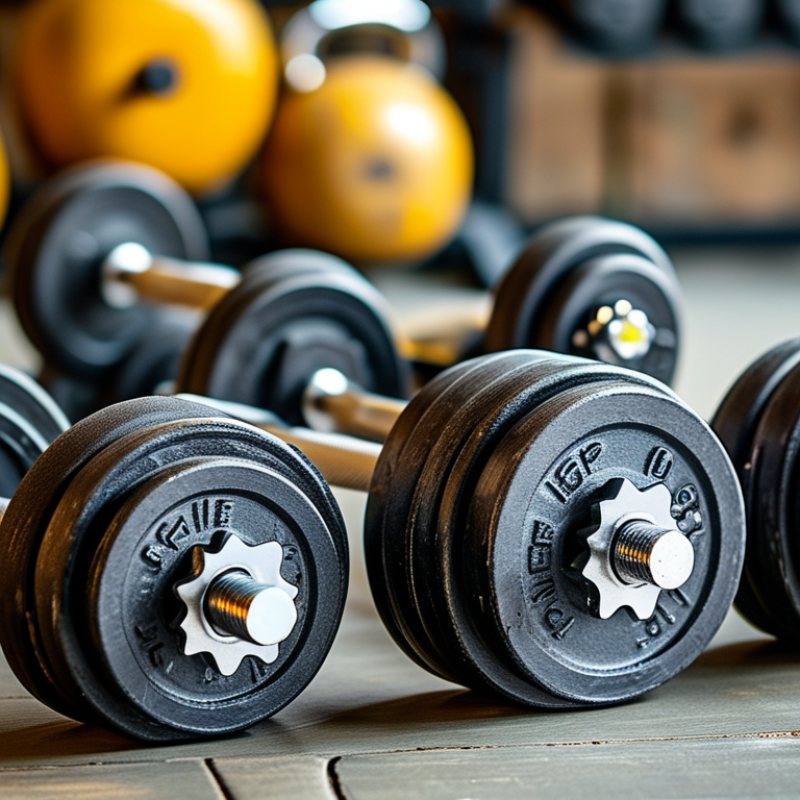
Define Your Training Goals and Dumbbell Requirements
Choosing the best dumbbell set starts with a clear training goal. Muscle building, general fitness, rehabilitation, and home circuits require different equipment. A beginner may need lighter weights for presses, raises, and controlled rows. A stronger lifter may need heavier pairs for squats and deadlifts. One weight rarely suits every movement.
Write down your main exercises before shopping. Note the lightest and heaviest loads you can use with stable form. If your shoulders fatigue quickly, smaller increments may matter more than maximum weight. Adjustable dumbbells can save space, but changing plates may interrupt fast workouts. Fixed dumbbells feel simpler and quicker, especially during circuits. Neither option is automatically better.
Space and comfort also shape your requirements. Measure the storage area, then check the handle length and grip texture. A handle that feels fine for five repetitions may become irritating after thirty. Rubberized surfaces can reduce noise, but strong odors may bother some users. This detail is easy to overlook. Select a set that supports gradual progression, not just impressive numbers. Increase resistance only when your technique remains controlled, your joints feel comfortable, and recovery is reasonable. I would also leave room for changing goals; a set chosen for basic conditioning may feel limiting during later strength work.
Define Your Training Goals and Dumbbell Requirements
Typical dumbbell loads per hand vary by training goal. Use these ranges as a practical starting point, then choose a set that allows gradual progression while maintaining proper form.
Compare Dumbbell Types, Materials, and Weight Adjustment Systems
10 Tips for Choosing the Best Dumbbell Set?
A dumbbell set should match your training space, grip, and progression plan. Fixed dumbbells feel stable and save setup time. They work well for busy home workouts. Adjustable dumbbells use less storage space. However, changing plates between exercises can interrupt your rhythm. Selectorized systems adjust quickly, but their internal mechanisms need careful handling. Consider the heaviest weight you can control safely, not the number printed on the box.
Material affects comfort and durability.
Cast iron usually offers a compact, hard-wearing design. Steel plates can feel precise but may damage floors without protection. Rubber or neoprene coatings reduce noise and protect surfaces. Rubber can still develop an odor in poorly ventilated rooms. Check the handle texture carefully. A sharp knurl may improve grip, yet it can irritate your palms during high-volume sessions. Small details matter.
Weight adjustment systems deserve close comparison.
Spin-lock collars are affordable and simple, but they need tightening between sets. Plate-loaded handles provide flexible progression and familiar mechanics. Quick-change systems are convenient, though their locks should feel secure before every lift.
I once chose a set based on maximum weight alone. The handles were too thick for comfortable pressing, so that decision was not ideal.
Test grip diameter, plate clearance, and adjustment speed when possible. Also check warranty terms, replacement parts, and the set’s total weight range. Five kilograms may feel sufficient today, but your training plan could change.
Choose Suitable Weight Ranges, Increments, and Handle Designs
Choosing the Best Dumbbell Set: Weight Ranges, Increments, and Handle Designs
Tip: Start with a weight range that matches your real training, not your ambition. For beginners, a set from 2 to 12 kilograms may cover presses, rows, curls, and squats. Experienced lifters often need heavier options for lower-body exercises. Test a weight for 8 to 12 controlled repetitions. The final two should feel challenging, but your posture should remain stable. If your shoulders rise or your back twists, the dumbbell is too heavy.
Tip: Pay attention to the increments between weights. Smaller jumps, such as 1 or 2 kilograms, help you progress without sudden strain. Larger jumps can work for squats, but they may frustrate smaller muscle groups. Adjustable dumbbells save space, though changing plates can interrupt a workout. Fixed dumbbells are faster to use. I once bought a set with large gaps, and my progress stalled between levels. That choice needed more thought.
Tip: Handle design affects control more than many buyers expect. Choose a grip that feels secure without sharp edges. A slightly textured handle can reduce slipping during sweaty sessions. However, aggressive knurling may irritate your palms. Check the handle length, too. An oversized grip can feel awkward during presses and lunges. Hold each dumbbell for a minute. Notice pressure points. Then reassess.
Evaluate Space, Storage, Durability, and Safety Features
Measure the training corner before comparing dumbbell weights.
Leave a clear path around the bench, rack, and doorway. Small rooms punish optimism. I once bought a set that fit the floor but blocked a cabinet. That mistake made every session awkward. Choose a compact rack, vertical storage, or adjustable weights when space is limited. Check the rack’s maximum load, base width, and floor contact points. Rubber feet can reduce sliding and protect hard flooring.
Storage affects durability more than many buyers expect.
Keep weights away from damp balconies and direct sunlight. Inspect handles, welds, adjustment pins, and coating edges before purchase. A loose mechanism is not a minor inconvenience. It can change the exercise suddenly.
The National Safety Council’s Injury Facts 2024, using U.S. CPSC estimates, reported about 377,000 exercise-equipment injuries in 2023.
That figure covers many equipment types, not dumbbells alone, but it supports careful home setup. Safety matters.
Select handles with secure knurling, without sharp edges. Test the grip with dry and slightly sweaty hands. For adjustable sets, confirm that plates lock firmly during slow overhead movements. Do not rely only on attractive specifications. For benches and racks, review recognized standards such as ISO 20957, where applicable, and read maintenance guidance. IHRSA’s 2024 Global Report recorded roughly 184 million health-club members worldwide in 2023, showing strong demand for resistance training spaces. Still, a popular product can be poorly suited to one room. Recheck measurements, storage access, and your honest lifting habits.
Balance Set Quality, Versatility, and Overall Budget
10 Tips for Choosing the Best Dumbbell Set
Balance Set Quality, Versatility, and Overall Budget
A good dumbbell set should match your training space, goals, and spending limit. The World Health Organization’s 2024 Global Status Report found that 31% of adults worldwide are insufficiently active. Strength equipment at home can reduce travel barriers, especially when the set supports regular use. I look for solid handles, secure weight plates, and smooth adjustments. Small defects become annoying quickly.
Versatility matters more than owning many weights. A compact adjustable set can support presses, rows, squats, lunges, and carries. Check the smallest increment carefully. Five-pound jumps may feel excessive during shoulder exercises, while larger jumps can help lower-body training. The American College of Sports Medicine’s 2024 Worldwide Survey continues to recognize traditional strength training as a major fitness direction. That supports choosing equipment for progressive overload, not appearance.
Budget needs a longer view. A cheap set may develop loose collars or rough edges. A premium set may still be wasteful if you train twice monthly. WHO guidelines recommend muscle-strengthening activities on at least two days weekly. Choose a weight range that makes that schedule realistic. I once bought a set with attractive storage but limited upper-body increments. It looked efficient. It was not. Compare the total cost, including racks, replacement parts, and floor protection. Leave a little room for better plates later.