- Home
- Products
- About Us
- News
- Contact Us
Leave Your Message
Choosing the right dumbbells can shape how safely and consistently people train. The best Fitness Dumbbell for a gym is not always the heaviest or most expensive option. It should suit the users, available space, training goals, and maintenance budget. A pair used for controlled shoulder raises faces different demands from weights used for daily strength circuits. Small details matter.
Start by considering weight range and progression. Fixed dumbbells are quick to grab, but a full rack needs floor space and a higher upfront investment. Adjustable models save room, though changing plates between sets can interrupt a busy class. Handle diameter, knurling, and grip comfort also affect control, especially when hands become sweaty. If possible, test the feel before ordering. A neat product photo tells you little about balance.
Materials and construction deserve close attention. Look for secure weight heads, durable finishes, and clear weight markings. Check whether the floor can support the rack and whether rubber-coated weights suit your cleaning routine. These practical checks may seem dull. They prevent avoidable headaches. Ask suppliers about warranties and replacement parts, then compare those details with the total cost over time. Reviews can help, but verify claims against specifications and real handling whenever possible. No single design fits every gym. Even experienced buyers can misjudge how quickly equipment gets used. This guide breaks down the main choices so you can match dumbbells to your space, members, and training plan—with fewer costly surprises.
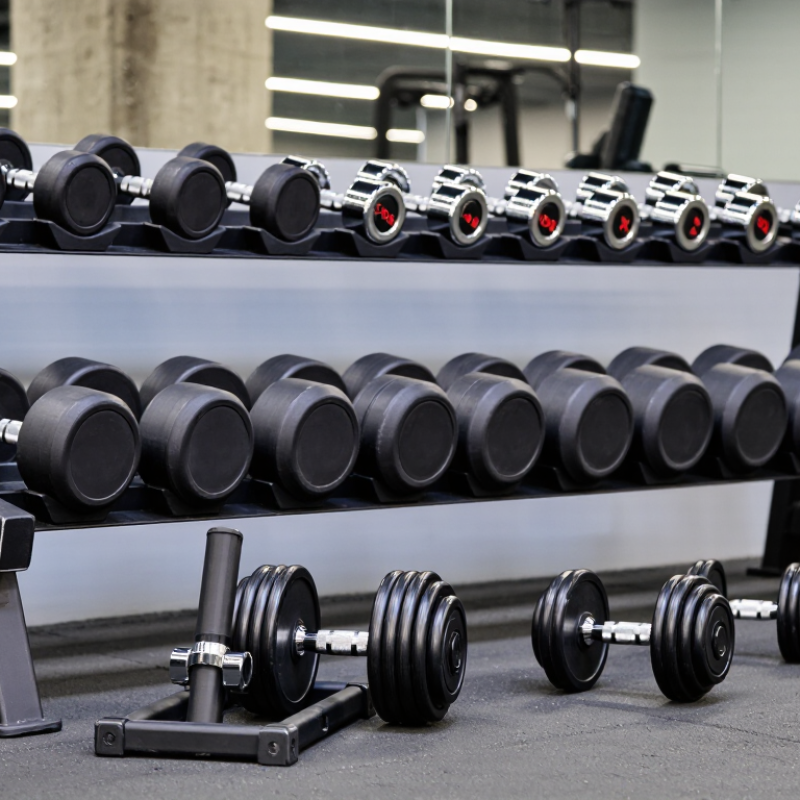
Before choosing dumbbells, map how people actually train in your gym. Track peak-hour use for a week and note whether members favor strength circuits, rehabilitation, or heavy compound lifts. Ask coaches which weights run out first. A rack with many light pairs may suit a beginner studio, while a strength room needs heavier options and durable handles. Do not rely on enrollment numbers alone. They can mislead.
Match the weight range to users’ experience, not just the strongest lifter. New users often benefit from lighter starting weights and small increments, allowing steady progress without awkward jumps. Experienced members need enough load for controlled sets, but extremely heavy pairs may sit unused in a general gym. Watch actual sessions. A short observation can reveal more than a polished survey. Still, one week may not represent typical use.
Consider how equipment is shared. If members routinely wait for the same mid-range pair, add duplicates before expanding rarely used extremes. Check grip comfort, clear weight markings, and whether staff can return pairs quickly. Leave room for growth; class attendance can shift seasonally. Review usage after a month and adjust. The first estimate may be wrong, and that is useful to know.
| User Level or Training Need | Suitable Dumbbell Format | Practical Weight Range | Useful Weight Increments | Gym Planning Considerations |
|---|---|---|---|---|
| Beginners learning basic movement patterns | Fixed-weight rubber-coated or urethane dumbbells | Approximately 1–15 kg per dumbbell | 1–2 kg steps at lighter weights | Prioritize easy-to-identify weights, secure grips, and enough pairs for popular introductory classes. |
| General-purpose strength training for mixed experience levels | Fixed-weight dumbbell rack with a broad selection | Approximately 2–30 kg per dumbbell | 1–2 kg steps at lighter weights; 2–2.5 kg steps at heavier weights | A broad range supports common upper- and lower-body exercises. Adjust the range to match member usage and available floor space. |
| Experienced lifters and progressive strength training | Heavy fixed-weight dumbbells, with appropriate rack storage | Approximately 10–50 kg per dumbbell, where demand justifies it | 2–2.5 kg steps are common in heavier ranges | Check that racks, flooring, and handling procedures are suitable for heavier equipment; heavy pairs may be used less often than mid-range weights. |
| Small studios or facilities with limited storage | Selectorized adjustable dumbbells or compact adjustable sets | Commonly around 2–24 kg per dumbbell; check each model’s capacity | Varies by design; some sets offer smaller steps at lower weights | These can reduce storage needs, but users may need time to change settings. Check adjustment security, durability, and suitability for shared use. |
| Group fitness and circuit training | Multiple pairs of light-to-medium fixed-weight dumbbells | Often approximately 1–10 kg per dumbbell | 1–2 kg steps provide useful choice for mixed classes | Buy several pairs in the weights most often selected by participants, and allow clear space for quick, safe changes between stations. |
| High-use commercial gym floor | Fixed-weight dumbbells with durable coating and commercial-grade racks | Set the range from observed demand; a common planning range is approximately 2–40 kg per dumbbell | Use closer steps where members frequently progress between weights | Consider grip comfort, clear weight markings, rack capacity, maintenance access, and replacement availability when comparing options. |
| Rehabilitation or controlled, low-load exercise | Light fixed-weight dumbbells, often with multiple light options | Approximately 0.5–5 kg per dumbbell | Small steps, such as 0.5–1 kg where available | Choose easy-to-handle shapes and clear markings. Exercise selection and loading should follow the guidance of the relevant qualified professional. |
Planning note: Weight ranges are general facility-planning examples, not individual prescriptions. Review member usage, class schedules, available space, budget, and equipment maintenance needs before selecting a final range and quantity.