How to Choose Commercial Dumbbell Racks in 2026?
Choosing commercial dumbbell racks in 2026 starts with the room, the users, and the weights they actually lift. A rack that looks compact online may block a walkway once it sits beside a bench. Measure the available floor space, including room for people to pick up and return dumbbells. Check the rack’s stated weight capacity against your heaviest pairs and expected use. Then inspect the details: welded joints, stable feet, durable coating, and trays that match your dumbbells’ shape. Small details matter.
Rack Dumbbells securely, but do not assume every rack suits every facility. A busy strength studio may need quick access and clear labeling. A hotel gym may value a smaller footprint and simple upkeep. Angled tiers can make handles easier to reach, while vertical designs may save floor space. Compare the full dimensions, not just the product photo. Ask suppliers about assembly, replacement parts, warranty coverage, and how capacity is tested. These are practical questions, not sales extras.
There is no perfect rack. Even a sturdy model can feel awkward if users crowd around it or return weights unevenly. Think through a normal workout: Can someone remove a heavy pair without twisting? Is the rack stable on your floor? Will the finish tolerate regular cleaning? Reliable choices come from matching verified specifications with real room conditions. A careful comparison now can reduce clutter, protect equipment, and make daily training smoother. But leave room to reconsider; gym layouts change.
Define the Gym’s Storage Needs and Dumbbell Inventory
Start with the dumbbells, not the rack. Count each pair by weight, from the lightest warm-up set to the heaviest load used on the floor. Record whether members need matched pairs or individual dumbbells, and note any gaps in the weight sequence. Then check what is actually in use during peak hours. A busy evening may reveal that the popular mid-range pairs need faster access than rarely used heavy weights.
The Health & Fitness Association’s 2024 U.S. Health & Fitness Consumer Report counted 72.9 million U.S. fitness-facility members in 2023, a record high. This national figure cannot predict your gym’s busiest hour, but it highlights why storage needs should reflect real traffic. Track peak-hour visits and observe where members pause, return weights, or crowd around equipment. Small details matter. A tape measure and a simple inventory sheet can expose bottlenecks before a rack is ordered.
Next, compare your inventory with the rack’s stated capacity, shelf spacing, and footprint. Include room for hands to lift and replace dumbbells safely, plus clear walking space around the unit. Measure the available wall length and floor area; account for doors, benches, and nearby training zones. A first estimate is often optimistic. If the gym plans to add weights, leave usable capacity rather than filling every slot on day one. Recheck the count after seasonal purchases or equipment changes.
Compare Commercial Dumbbell Rack Types and Weight Capacities
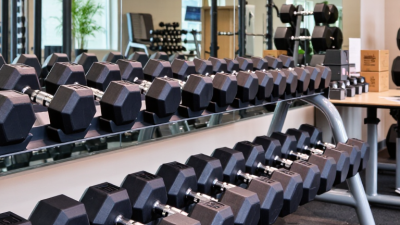
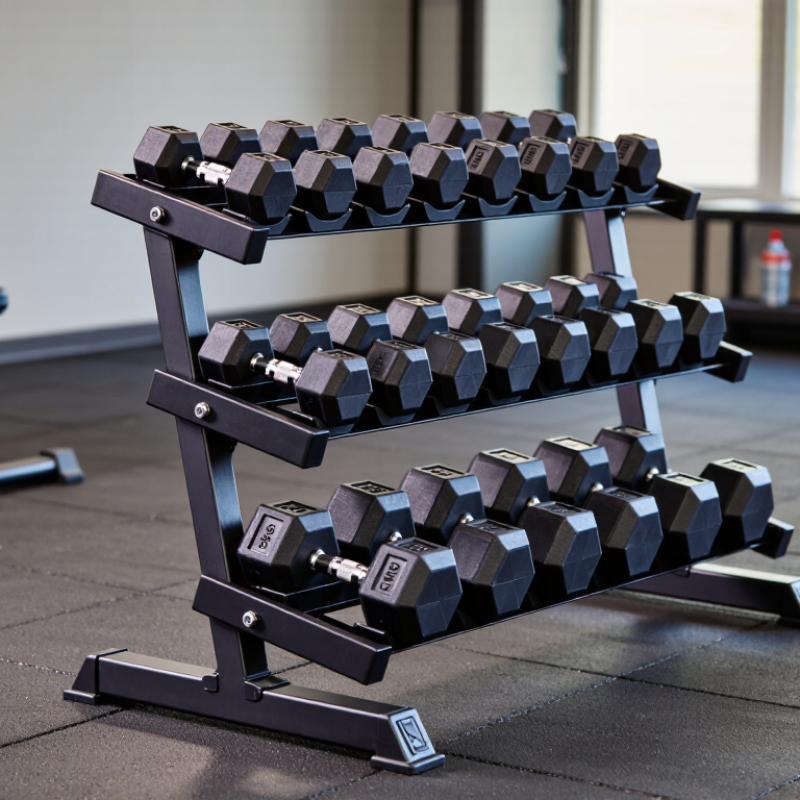
Commercial dumbbell racks usually fall into horizontal, vertical, and multi-tier designs. Horizontal racks display pairs clearly and make heavier dumbbells easier to lift without reaching high. They need more floor space, though. Vertical racks use a smaller footprint, but placing heavy weights near shoulder height can feel awkward. Measure twice. Three-tier racks can hold many pairs, provided the shelves are deep enough for the dumbbell heads and handles.
Compare rated load capacity with the total weight you plan to store, not just the number of pairs. For example, ten pairs averaging 50 pounds place 1,000 pounds on the rack. Leave room for future weight increases, and check the load rating for each shelf as well as the whole frame.
Small details matter. A rack may appear sturdy, yet narrow saddles or crowded tiers can make weights harder to return safely. I would not choose the most compact option automatically; a few extra inches of clearance may matter more during busy sessions. Check floor level, frame materials, welds, and the manufacturer’s specifications before purchase.
Assess Materials, Stability, Safety, and Maintenance
How to Choose Commercial Dumbbell Racks in 2026?
Assess Materials, Stability, Safety, and Maintenance
Choose a commercial dumbbell rack by examining its frame, not just its stated capacity. Look for thick-walled steel, continuous welds, and a durable powder coating. Inspect joints for gaps, sharp edges, or paint that is already lifting. In busy gyms, repeated loading can expose weak corners quickly. Heavier steel often improves rigidity, but it also increases weight and delivery difficulty. That trade-off matters.
Tips: Place the rack on a level, clean floor and load both sides evenly. Check the feet and fasteners after installation; a small wobble can grow with daily use. Check the floor, too. Confirm dumbbells sit securely in their saddles, with handles easy to grasp and no pinched fingers.
Before buying, compare rack depth and tier spacing with your actual dumbbells. A compact footprint is useful, but crowded handles slow transitions and invite knocks. Ask whether replacement bolts or touch-up coating are available; routine upkeep should not require special tools. Wipe sweat promptly, inspect welds and fasteners monthly, and keep damaged parts out of service until repaired. Maintenance schedules vary with traffic. A quiet rack is not proof of a sound one, so inspect it directly.
How to Choose Commercial Dumbbell Racks in 2026?
Typical material density (kg/m³): Steel frames are substantially denser than aluminum, while plywood and HDPE are lighter options often used for panels or protective components. Density alone does not determine rack stability or safety: also check frame design, welds, load rating, anchoring, and floor condition. Values are typical estimates and vary by grade and product.
Measure Available Space and Plan User Access
Before choosing a commercial dumbbell rack, measure the room as it is, not as the floor plan suggests.
Record usable wall length, ceiling height, columns, door swings, and fixed equipment. Measure the rack’s full depth, including the dumbbells, not just its frame. Users need room to approach, lift, and return weights without twisting around a bench. Small details matter. Mark the proposed footprint with tape, then walk through it while carrying a weight. This simple test often reveals awkward corners that measurements miss.
Plan for movement, not just storage.
Watch how people enter, browse for weights, and move between training areas. Keep the main route clear, and avoid placing a rack where open doors or busy walkways interrupt access. Heavier pairs may be easier to reach on lower tiers, but check the rack’s loading guidance and your users’ needs. Leave some space for future equipment; a layout that works today can feel cramped after one new bench arrives. I have seen neat floor plans fail because nobody tested them during a busy session. Recheck the layout with actual users before fixing the rack in place.
Compare Costs, Warranties, and Supplier Support in 2026
How to Choose Commercial Dumbbell Racks in 2026?
When comparing commercial dumbbell racks, look beyond the listed price. Ask for a written quote that includes freight, assembly, and any required floor protection. A low quote can grow quickly. Measure the rack footprint and check that loaded shelves leave enough room for members to move safely.
Compare warranties by component, not just by the number of years. The frame may have different coverage from moving parts or finish. Read the exclusions for damage, corrosion, and normal wear. Ask who pays for shipping and labor if a repair is approved. These details matter when a rack holds heavy weights every day. Keep a copy of the warranty with your purchase records.
Supplier support deserves a practical test. Before ordering, ask how quickly the supplier can provide replacement hardware, assembly instructions, or a response to a service question. A clear answer is reassuring; vague promises are not. Check whether parts can be ordered individually, so a missing bolt does not leave an entire station out of use. I would still expect some delays—shipping estimates are not guarantees. Compare the full ownership cost, then choose a rack that fits your room, budget, and maintenance capacity.