Leave Your Message

Who Are the Top Steel Dumbbell Manufacturers in China?

Choosing a supplier for Steel Dumbbells involves more than comparing prices or browsing polished product photos. Buyers need to understand how each manufacturer handles materials, weight accuracy, surface finish, and production consistency. A dumbbell should feel balanced in the hand, with secure heads and a finish that can withstand repeated use. Small details matter.

China has a broad fitness-equipment manufacturing base, but “top” depends on what a buyer values. A gym may prioritize dependable bulk production, while a retailer may need flexible packaging, custom branding, or smaller orders. Not every factory is right for every project. And a low quoted price may not include the same specifications, testing, or shipping terms as a competing offer.

This article explores how to identify leading Chinese steel dumbbell manufacturers and compare them with practical criteria. It considers product range, manufacturing capabilities, quality-control processes, customization, communication, and export experience. These points can help buyers prepare better questions and assess supplier claims more carefully. Where information is not independently verified, it should be treated as a starting point, not a guarantee. Request current specifications, inspection records, and samples before making a decision. That extra check takes time, but it can reveal differences that a catalog cannot.
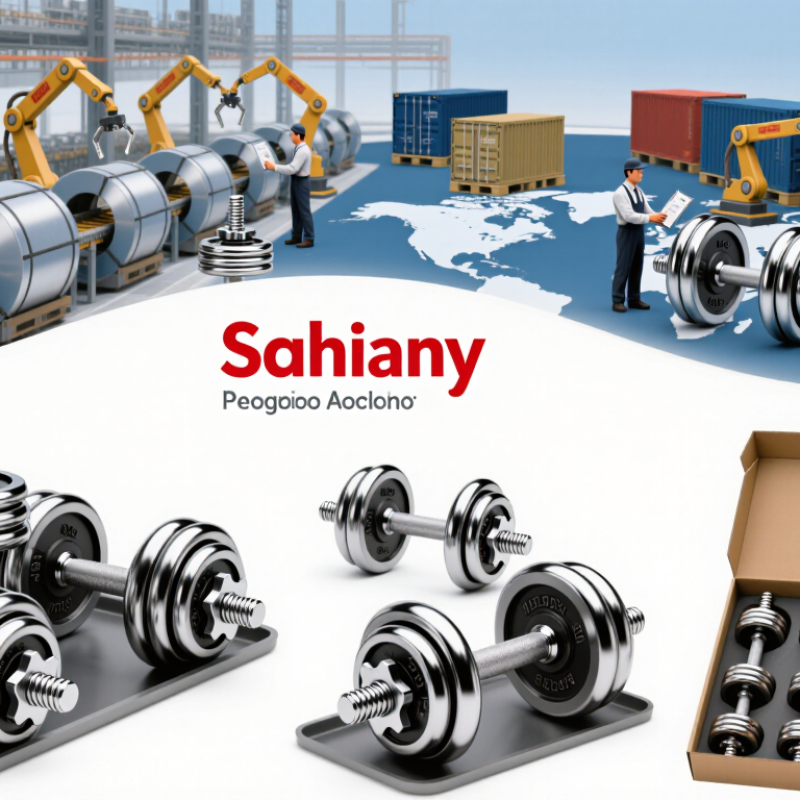
Who Are the Top Steel Dumbbell Manufacturers in China?

What Qualifies as a Steel Dumbbell Manufacturer in China?

A steel dumbbell manufacturer in China should do more than coordinate orders. Look for a factory with clear control over steel sourcing, machining, handle knurling, welding, coating, and final assembly. Ask which steps happen in-house and which are subcontracted. A sales office alone is not proof of manufacturing capacity. That distinction matters.

Reliable suppliers can explain steel grades, weight tolerances, and how each dumbbell is checked before packing. Request sample inspection records, scale calibration details, and photos of production stages. Check whether the coating resists chips and corrosion under ordinary gym use, and ask how that claim was tested. Documentation should match the actual product, not just a generic catalog page. Factories differ.

Tip: Start with a sample. Measure its weight, inspect the welds and handle finish, then compare delivered units with the approved sample. Ask for a written quality plan, carton specifications, and clear procedures for handling defects. An on-site or independent audit can help verify production capacity, though one visit cannot reveal every issue. Even careful checks can miss a recurring flaw.
How to Evaluate China’s Leading Steel Dumbbell Manufacturers

Choosing a steel dumbbell manufacturer in China requires more than comparing quoted prices. Ask for the steel grade, handle diameter, weight tolerance, and coating process. Request a production sample, then inspect its balance, knurling, welds, and end-cap alignment. Small defects show up quickly during daily use. Ask for evidence.

Evaluate how the factory controls repeatability, not just how one sample looks. Review inspection records, calibration routines, batch identification, and procedures for handling rejected units. Confirm that drawings, packaging specifications, and delivery schedules are documented in writing. A video tour can help, but it cannot replace a physical audit or independent testing when order risks are high. Communication matters. Slow or vague answers may signal delays, though they do not prove poor production. Even experienced buyers can overvalue a polished sample; production consistency deserves more scrutiny.

Tips: Compare samples from separate production runs. Weigh each unit on a calibrated scale, check its finish under bright light, and record variations. Ask who pays for rework if agreed tolerances are missed. Keep the checklist practical; a few useful checks beat a long form nobody follows.

Who Are the Top Steel Dumbbell Manufacturers in China? — How to Evaluate China’s Leading Steel Dumbbell Manufacturers

Evaluation Dimension Suggested Weight What to Check Evidence to Request Scoring Guide (0–5)
Material traceability 20% Confirm the stated steel type and whether material records can be linked to production batches. Do not assume that all steel dumbbells use the same grade. Material specification, supplier documentation, and batch-linked inspection or material certificates. 0 = no supporting records; 3 = documentation for sampled batches; 5 = consistent, batch-level traceability and verifiable records.
Weight accuracy and quality control 20% Ask how finished dumbbells are weighed, how samples are selected, and how out-of-tolerance products are handled. Agree on an acceptable tolerance in the purchase specification; there is no single tolerance suitable for every order. Written inspection plan, sample measurement records, scale calibration records, and a mutually agreed product tolerance. 0 = no documented checks; 3 = documented sampling checks; 5 = agreed tolerances, calibrated equipment, recorded results, and a clear corrective-action process.
Structural integrity and finish 15% Inspect handles, heads, joints, edges, and finish on production-representative samples. Confirm that the design and construction are appropriate for the intended use. Production samples, drawings or specifications, documented inspection results, and details of any applicable product-safety testing. 0 = no samples or inspection evidence; 3 = acceptable samples and basic checks; 5 = repeatable documented checks against agreed specifications.
Coating and corrosion resistance 10% Identify the coating or surface treatment and inspect coverage, adhesion, and visible defects. ISO 9227 specifies salt-spray test methods; the standard itself does not set one universal pass requirement for every product. Coating specification, sample inspection records, and any relevant test report stating the method, test duration, and acceptance criteria. 0 = coating and checks are unspecified; 3 = finish is specified and visually inspected; 5 = agreed acceptance criteria are supported by documented inspections or relevant test results.
Quality management and process control 10% Review how incoming materials, production steps, nonconforming products, and corrective actions are controlled. An ISO 9001 certificate concerns a quality-management system; it is not, by itself, proof that a particular dumbbell meets product specifications. Current certificate and certification scope, process-control documents, inspection records, and corrective-action examples. 0 = no verifiable process controls; 3 = basic documented controls; 5 = relevant, verifiable system with records that match the product and production site.
Destination-market documentation 10% Confirm requirements for the intended sales market and product configuration. Ask for applicable declarations, test reports, and material or chemical information rather than assuming one certificate covers every market. Market-specific documentation with identifiable product scope, issuing organization, test methods where relevant, and valid dates where applicable. 0 = requirements are not addressed; 3 = some relevant documents are provided; 5 = a complete, verifiable document set is mapped to the order and destination market.
Production capacity and delivery planning 10% Compare the requested order quantity with demonstrated production capability. Confirm lead time, production schedule, peak-season constraints, and how delays are communicated. Production plan, order-specific lead-time commitment, capacity evidence relevant to the requested quantity, and shipment schedule. 0 = no clear plan; 3 = plausible schedule with limited supporting detail; 5 = order-specific plan with milestones and a documented delay-management process.
Customization and specification control 5% Check whether requested dimensions, weight increments, handle details, finish, labeling, or packaging can be specified and kept consistent between samples and production. Approved drawings or specification sheet, pre-production sample approval, and change-control records. 0 = requirements cannot be clearly documented; 3 = specifications are documented; 5 = approved specifications and changes are controlled through production.
Packaging and export readiness 5% Review packaging for the product’s weight and shipping route. Confirm carton or pallet details, labeling, packing quantity, and responsibility for export documents. Packaging specification, packing photos or samples, carton and pallet details, and a document checklist for the shipment. 0 = packaging and shipping responsibilities are unclear; 3 = basic packaging plan is available; 5 = order-specific plan and responsibilities are documented.
After-sales and issue resolution 5% Agree on the process for reporting defects, submitting evidence, investigating root causes, and arranging replacement or other remedies. Written claims procedure, response-time commitment, warranty terms, and examples of corrective-action documentation where available. 0 = no defined process; 3 = written terms are available; 5 = clear timelines, responsibilities, and documented resolution steps.

How to use this framework: The percentage weights are suggested evaluation weights, not measured market data or a ranking of individual manufacturers. Score each supplier from 0 to 5 using the evidence provided, then calculate the weighted score as (score ÷ 5) × dimension weight. Verify documents independently where practical, and put final product specifications, tolerances, inspection criteria, and remedies into the purchase agreement.

Profiles of Notable Steel Dumbbell Manufacturers in China

China’s steel dumbbell manufacturers often differ more in production focus than in product appearance. Some factories concentrate on solid steel heads and compact designs for home training. Others handle broader gym-equipment orders, with dumbbells made in several weight increments. Details matter.

A useful manufacturer profile should describe how the steel is shaped, finished, and checked. Ask whether heads are forged or cast, and how handles are joined. Inspect sample units for smooth knurling, even coating, and secure connections. A chipped finish or uneven handle can affect everyday use. These checks are more informative than a polished catalogue alone.

Export-oriented suppliers may offer custom weight markings, packaging, or dimensions, while smaller workshops may suit simpler orders. Capacity, lead time, and inspection procedures should be confirmed for the specific product, not assumed from a company’s general claims. This comparison is imperfect: public information rarely reveals every production detail. Requesting samples and asking for clear quality records can help buyers assess a supplier’s consistency before placing a larger order.

Products and Production Capabilities of Leading Manufacturers

China’s leading steel dumbbell manufacturers typically serve several markets, from compact home-training sets to commercial gym equipment. Their product ranges may include fixed-weight dumbbells, adjustable designs, and steel handles with rubber or urethane coatings. Some models use knurled grips, which help maintain control when hands become sweaty. Details matter.

Production capability is more than factory size. A capable supplier can machine handles evenly, control weight tolerances, and apply coatings that resist chips during routine handling. Buyers should ask how weights are checked, whether samples come from normal production, and how packaging protects the ends in transit. A consistent inspection process is more useful than a large capacity claim.

Manufacturers with in-house machining and finishing may coordinate product changes more directly. However, not every facility controls every stage; some work with outside coating or packaging partners. A catalog alone cannot confirm this. Request drawings, sample measurements, and clear specifications for handle diameter, finish, and weight range. Even small variations can affect grip and balance. A sample may look excellent, while later batches differ slightly, so ongoing checks deserve attention.

How to Verify and Choose a Chinese Steel Dumbbell Supplier

China’s steel capacity is substantial, but capacity alone cannot verify a dumbbell supplier. The World Steel Association’s World Steel in Figures 2024 reports that China produced 1,019.1 million tonnes of crude steel in 2023. That figure describes raw steel, not finished fitness equipment. Ask suppliers for business registration, factory-audit records, material certificates, and traceable batch numbers. Then compare certificates with the steel actually used in your sample order.

Check each sample with calibrated scales, calipers, and a coating-thickness gauge. Weigh several units, not just one, and record the agreed tolerance in the purchase contract. Ask for weld inspection, corrosion-test results, and packaging-drop test records. For independent testing, use a laboratory accredited to ISO/IEC 17025 for the relevant test methods. Not a logo on a certificate. Verify its scope. A polished factory video can look convincing, yet it may show another production line. Request live video of your order, dated process photos, and a pre-shipment inspection. I would still treat one successful sample cautiously; mass production can reveal inconsistent filling, rough seams, or chipped coating.