How to Choose the Right Dumbbell Weights for Your Workout Routine
When embarking on a fitness journey, one of the most crucial decisions you will face is choosing the right dumbbell weights for your workout routine. As renowned fitness expert Dr. Emily Carter aptly states, "Selecting the appropriate dumbbell weights is essential for maximizing your strength gains while minimizing the risk of injury." This insight emphasizes the importance of understanding your own fitness level and goals when it comes to resistance training.
Dumbbell weights come in various sizes and types, and knowing how to select the ideal pair can significantly impact your progress. Whether you're a beginner aiming for muscular endurance or a seasoned athlete focusing on powerlifting, the right weights can facilitate effective workouts that lead to desired results. This guide will navigate the intricacies of choosing dumbbell weights tailored to your individual needs, ensuring that you engage in a safe and productive routine.
Ultimately, the right selection of dumbbell weights will not only enhance your performance but also keep you motivated as you witness tangible improvements in your strength and fitness levels. With the right knowledge, you can make informed choices that align with your specific aspirations and capabilities.
Understanding Your Fitness Goals and Level
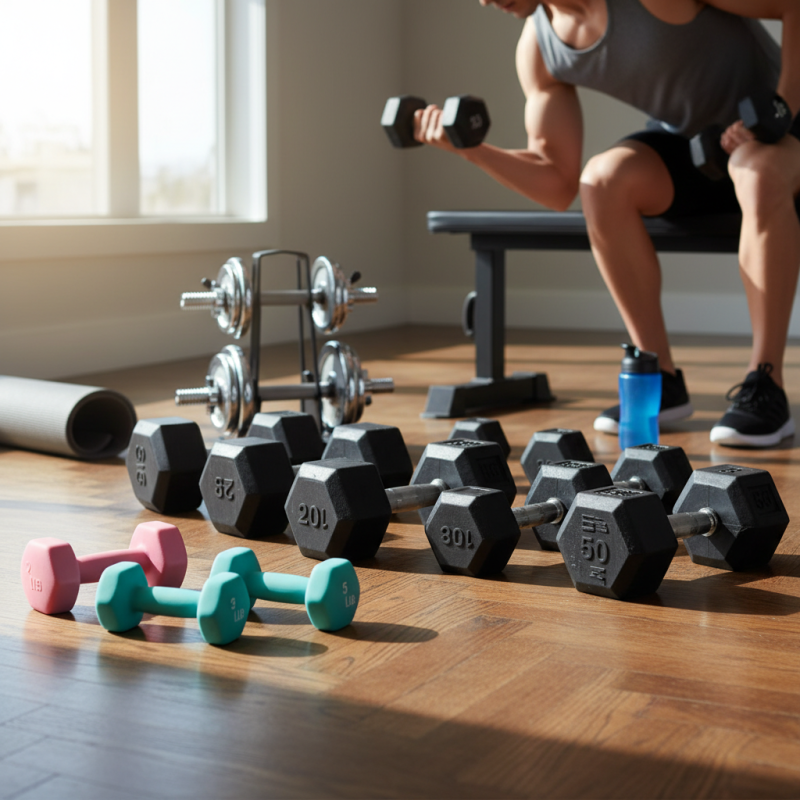
When selecting the right dumbbell weights for your workout routine, it’s essential to start by understanding your fitness goals and current fitness level. Are you aiming to build strength, increase endurance, or perhaps improve muscle tone? Each goal requires a different approach to weight selection. For example, if your primary objective is to build muscle mass, you will benefit from using heavier weights with fewer repetitions. On the other hand, if your focus is on endurance or toning, lighter weights with higher repetitions might be more effective.
Furthermore, assessing your fitness level is crucial in making the right choice. Beginners should generally start with lighter weights to master form and prevent injury. As you become more comfortable with exercises, gradually increasing the weight will help you continue to challenge your body and achieve your fitness objectives. It's also vital to listen to your body; if you find that a particular weight feels too easy or too challenging, don’t hesitate to adjust accordingly to ensure your workouts remain effective and safe.
How to Choose the Right Dumbbell Weights for Your Workout Routine - Understanding Your Fitness Goals and Level
| Fitness Level |
Recommended Dumbbell Weight |
Typical Reps |
Main Focus Area |
| Beginner |
5-15 lbs |
8-12 |
Full Body |
| Intermediate |
15-30 lbs |
6-10 |
Strength/Hypertrophy |
| Advanced |
30-50 lbs |
4-8 |
Strength/Power |
| Expert |
50+ lbs |
3-6 |
Performance Enhancement |
Assessing Your Current Strength and Experience
When selecting the right dumbbell weights for your workout routine, assessing your current strength and experience is crucial. Start by determining your fitness level. If you’re new to strength training, it's essential to begin with lighter weights to learn proper form and technique. This approach helps prevent injuries and builds a solid foundation. Consider performing a variety of exercises to gauge your comfort level; for example, try a few sets of bicep curls or shoulder presses with different weights to identify where you feel challenged yet capable.
Tips: One effective method to evaluate your strength is the "two-rep rule." Choose a weight that allows you to perform 8-12 repetitions comfortably but is challenging enough that you could only manage 2 more reps at most. This ensures that the weight is appropriate for your current strength level while still providing room for growth.
As you progress, periodically reassess your strength. Incorporating a variety of scenarios into your training – such as using higher weights for fewer reps or lower weights for more reps – can keep your routine balanced and engaging. Tracking your progress over time will help you determine when it’s time to increase your weight, ensuring you continually challenge yourself and enhance your strength effectively.
How to Choose the Right Dumbbell Weights for Your Workout Routine
Selecting the Right Dumbbell Weight Range
When selecting the right dumbbell weight range for your workout routine, it is essential to consider your fitness level, goals, and the types of exercises you intend to perform. According to the National Strength and Conditioning Association, beginners typically start with weights that allow for 12 to 15 repetitions per set while maintaining proper form. For strength training, a good range usually falls between 70% to 85% of one-repetition maximum (1RM) for advanced lifters. This approach helps ensure you train effectively while minimizing the risk of injury.
Tips: Start by testing different weights to find what feels comfortable yet challenging. It's advisable to use lighter weights for compound movements such as squats or bench presses, particularly when emphasizing form. Consider progressively increasing the weight by approximately 5% once you can comfortably perform three sets of 12 reps with the current weight.
Additionally, incorporating a range of weights in your sessions can provide varying levels of intensity and prevent plateaus. A study from the American College of Sports Medicine suggests that alternating between lighter weights for endurance sets and heavier weights for strength sets can optimize muscle growth and overall conditioning. Keep in mind that regular assessment of your strength and adjusting your weights accordingly is crucial for continuous progress.
Incorporating Adjustable Dumbbells into Your Routine
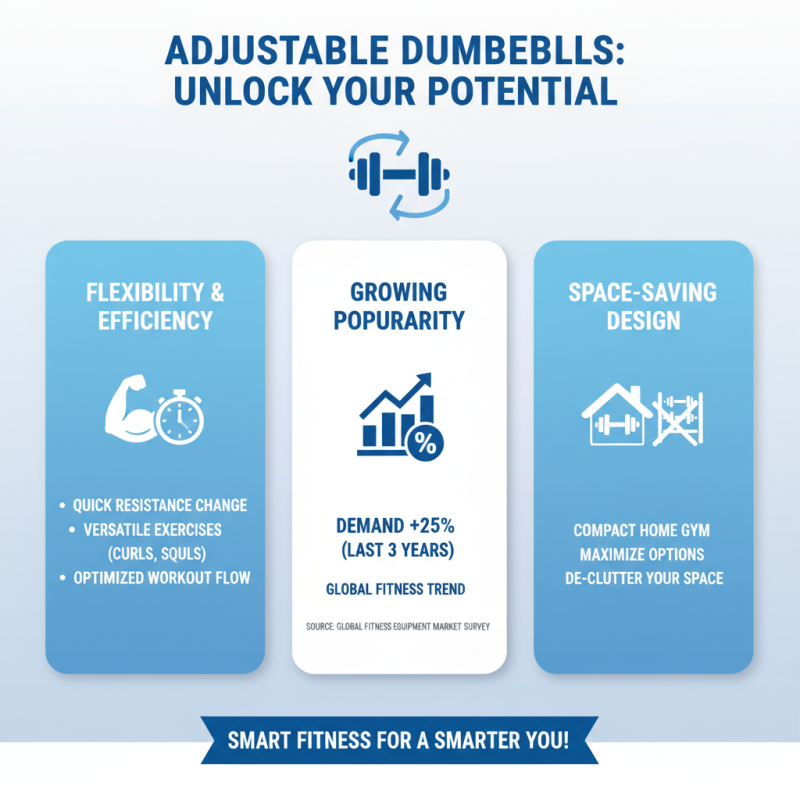
Incorporating adjustable dumbbells into your workout routine offers unparalleled flexibility and efficiency. According to a recent survey by the Global Fitness Equipment Market, the demand for adjustable weights has increased by 25% over the last three years, reflecting a growing recognition of their benefits. Adjustable dumbbells allow users to quickly modify their resistance levels, making them ideal for various exercises, whether you're performing curls, squats, or shoulder presses. Their space-saving design is perfect for those with limited home gym space, allowing you to maximize your workout options without overcrowding your environment.
Tips for choosing the right adjustable dumbbells include assessing your fitness level and goals before making a purchase. Beginners may opt for a weight range of 5 to 25 pounds, while intermediate and advanced users should consider models that can go up to 50 pounds or more. Always ensure the adjustable mechanism is secure and easy to use, as this will save you time when switching weights during your workout. Consistency in training is key, and having the right equipment can help maintain motivation and focus.
Furthermore, integrating adjustable dumbbells into your routine enhances your ability to progressively overload your muscles—a principle underscored by the National Strength and Conditioning Association. By gradually increasing your weights, you can stimulate muscle growth and strength gains more effectively. Make a habit of regularly assessing your lifting performance, and adjust your weight selections as needed to continually challenge your body and prevent plateaus.
Monitoring Progress and Adjusting Weights Accordingly
When embarking on a strength training journey, it's crucial to monitor your progress and adjust your dumbbell weights accordingly to ensure continuous improvement. One effective way to track your progress is by keeping a workout journal. Documenting your exercises, weights used, repetitions completed, and how you felt during each session can provide valuable insights. Regularly reviewing this information will help you identify patterns, such as when you consistently find a weight too manageable or when you struggle to complete your sets.
As your strength and endurance improve, it’s essential to increase your weights to avoid plateaus. A good rule of thumb is to adjust your dumbbell weights when you can perform more than 12-15 repetitions with ease. Incremental increases, even as small as 1-2 pounds, can make a significant difference over time. Prioritize gradual progression to prevent injury and promote long-lasting gains in strength and muscle development. Listening to your body and making adjustments based on your capacity will not only enhance your results but also keep your workouts engaging and effective.