Leave Your Message

10 Best Rubber Coated Dumbbell Suppliers for Global Buyers

Choosing a dependable Rubber Coated Dumbbell supplier affects product quality, shipping performance, and customer satisfaction. Global buyers need more than attractive catalog photos. They must examine manufacturing experience, material consistency, weight accuracy, packaging strength, and after-sales support. A dumbbell can look polished online yet arrive with damaged coating or uneven handles.

This guide reviews 10 leading Rubber Coated Dumbbell suppliers for international purchasing teams, gym operators, distributors, and private-label brands. Each supplier is considered through practical factors, including production capacity, quality-control procedures, customization options, certifications, minimum order quantities, and export experience. We also look at details that matter in real use, such as odor, grip texture, flat ends, and coating resistance after repeated drops.

Details matter.

The comparison aims to support informed decisions rather than promote one universal choice. Supplier information can change, and published specifications may not tell the whole story. Buyers should request current samples, factory evidence, test reports, and shipping quotations before placing large orders. In some cases, a lower unit price may hide higher freight costs, weaker cartons, or inconsistent finishing. That possibility deserves attention. A supplier with excellent equipment may still communicate slowly or struggle with smaller orders. By combining documented evidence with practical purchasing experience, this introduction provides a clearer starting point for evaluating reliable partners in the global fitness equipment market.
10 Best Rubber Coated Dumbbell Suppliers for Global Buyers

What Makes a Rubber-Coated Dumbbell Supplier Reliable

A reliable rubber-coated dumbbell supplier proves quality through repeatable details, not attractive catalog photos. Ask for material specifications, rubber hardness, handle dimensions, and coating thickness. Experienced suppliers can explain how these values affect grip, odor, floor protection, and long-term durability. They should also provide recent test records for weight accuracy, surface bonding, corrosion resistance, and drop performance. Details matter.

Factory experience becomes visible during sampling. A dependable supplier sends samples matching the proposed production standard, including logo placement, handle knurling, color, and packaging. Inspect the dumbbell for sharp edges, uneven coating, loose inserts, and strong chemical odors. Request several units from different production batches. One perfect sample proves very little. A small variation can reveal weak process control.

Reliable communication is equally important for global buyers. The supplier should confirm lead times, carton measurements, loading plans, payment terms, and replacement procedures in writing. Traceable batch numbers and inspection photos make problems easier to investigate. Independent quality checks may add cost, but they reduce unpleasant surprises. No supplier is flawless. Even careful buyers can overlook changes between samples and mass production. A practical partnership leaves room for questions, corrections, and honest review after delivery. That is more useful than polished promises.

What Makes a Rubber-Coated Dumbbell Supplier Reliable?

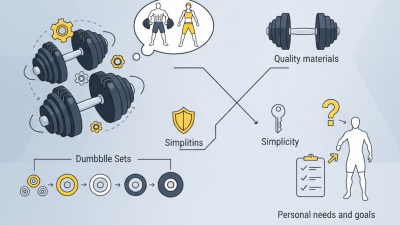
Buyer-side weighting model for evaluating rubber-coated dumbbell suppliers worldwide

The model prioritizes quality management, material safety, product testing, manufacturing consistency, export capability, and after-sales support. Buyers should verify claims through ISO 9001 documentation, applicable chemical compliance records, batch inspection reports, production samples, and shipping references before placing an order.

Key Criteria for Ranking the 10 Best Global Suppliers

Key Criteria for Ranking the 10 Best Global Suppliers

A reliable ranking starts with product performance, not attractive catalog images. Rubber coated dumbbells should have accurate weights, balanced handles, and a coating that resists peeling. I would request samples before approving any supplier. Check the surface after repeated drops, wiping, and exposure to normal gym moisture. Small details matter. A strong supplier provides material specifications, coating data, dimensional tolerances, and inspection records. Independent test reports add credibility, but documents alone cannot replace hands-on evaluation.

Manufacturing consistency deserves equal attention. Review production capacity, quality-control checkpoints, and batch traceability. Ask how workers inspect handle alignment, head symmetry, and surface defects. A dependable factory should explain its corrective-action process when a batch fails inspection. Supplier audits can reveal storage problems, weak packaging, or rushed production. However, one successful audit is not permanent proof. Conditions may change after the visit.

Global buyers also need practical commercial evidence. Compare minimum order quantities, lead times, packaging strength, shipping experience, and export documentation. Clear communication is essential when specifications cross language and time-zone barriers. Samples should match mass production, or the ranking becomes misleading. I would also examine warranty terms and response times after delivery. No scorecard is perfect. Price may receive too much attention, while service reliability remains difficult to measure. A careful ranking should combine test results, factory evidence, customer references, and repeated order performance.

Product Quality, Materials, and Manufacturing Capabilities

For global buyers, rubber-coated dumbbell quality begins beneath the surface. The core should use consistent cast iron or steel, while the rubber compound needs stable hardness, strong adhesion, and controlled odor. ASTM D412 tensile testing and ISO 37 measurements can help verify rubber strength. A supplier should provide recent laboratory reports, not only attractive samples.

Manufacturing capability matters just as much. Reliable factories control weighing, mold temperature, curing time, and surface trimming. These details prevent uneven handles, peeling edges, and inaccurate weights.

The Global Wellness Institute reported that the physical activity economy reached about US$1.1 trillion in 2022 and could approach US$1.7 trillion by 2027. This growth increases demand, but capacity alone does not prove consistency. I would inspect batch records, equipment maintenance, and defect rates. A glossy finish can still hide weak bonding.

Tips:

Request samples from three production batches. Check weight tolerance with a calibrated scale. Press the coating near the handle and inspect for gaps.

Ask whether recycled rubber is used, and require composition details. Low odor is not proof of safety.

No factory is perfect. However, repeated cracks, loose inserts, or sharp molding seams should trigger rejection.

Packaging also deserves attention, because dumbbells can rub against each other during long-distance shipping. Photograph every inspection stage and connect results to the production lot.

Pricing, Minimum Orders, Certifications, and Shipping

Global buyers should compare rubber coated dumbbell suppliers beyond the factory quote. Grand View Research projects the global fitness equipment market to grow at over 5% annually through 2030. That growth increases supplier competition, but quality still varies. Standard dumbbells often cost about USD 1.20–2.80 per kilogram before packaging and freight. Custom colors, logos, and unusual weights raise the price. Minimum orders commonly range from 300 to 1,000 pieces. Smaller trial orders may be possible, but the unit price usually increases.

Certifications need careful checking. Ask for ISO 9001 quality-management records, REACH or RoHS test results, and independent reports covering rubber odor, heavy metals, and abrasion. CE marking may apply to certain machinery, but it does not automatically certify dumbbells. Request recent test dates, laboratory names, and product-model numbers. The Global Wellness Institute valued the wellness economy at USD 5.6 trillion in 2022, showing strong demand, yet certification paperwork can still be incomplete. I have seen buyers trust a certificate too quickly. That is a costly mistake.

Tips: Compare three landed-cost quotations, not factory prices alone. Confirm carton dimensions, gross weight, pallet rules, and shipping terms. Sea freight usually reduces cost for heavy orders, while air freight suits samples. Ask suppliers to quote FOB, CIF, and DDP separately. A pre-shipment inspection can check handle alignment, coating thickness, odor, and carton damage. Some suppliers promise low MOQs, but their packaging limits may quietly change the final cost.

How to Choose the Best Supplier for Your Target Market

Choosing among the 10 best rubber coated dumbbell suppliers requires more than comparing prices. The right partner must fit your target market, sales channel, and expected training environment. A supplier serving home users may not meet the durability needs of commercial gyms. Check rubber density, handle grip, weight accuracy, coating adhesion, and odor before placing a large order. Request samples from several suppliers and inspect them after repeated drops on a suitable test surface.

Ask for factory audit records, material specifications, quality control procedures, and export experience. Reliable suppliers should explain their production capacity, minimum order quantity, packaging options, and replacement policy clearly. They should also provide documents required by your destination market. Requirements can differ widely, so verify them with local professionals. One overlooked detail can delay an entire shipment.

Tips: Match packaging to your market. Retail customers may need compact cartons, while gyms often prefer stronger bulk packaging. Compare total landed cost, not just the unit price. Include freight, duties, storage, inspection, and possible defect losses. Communication matters too. Test response times with detailed questions. A supplier who gives vague answers before payment may create larger problems later. No evaluation is perfect. Recheck assumptions after receiving the first production batch.

10 Best Rubber Coated Dumbbell Suppliers for Global Buyers - How to Choose the Best Supplier for Your Target Market

Supplier-selection matrix based on common international sourcing requirements, product specifications, order quantities, compliance documentation, logistics, and target-market suitability.

Supplier Profile Typical Manufacturing Region Core Product Range Common Weight Range Rubber Coating Options Typical MOQ Indicative Production Lead Time Private Label Capability Common Documentation Best-Fit Target Market Key Buying Advantage Evaluation Score
Profile 1: High-Volume OEM Factory East and Southeast Asia Hex and round rubber-coated dumbbells for commercial and retail channels 2.5–50 kg per dumbbell Virgin or recycled rubber Custom color Textured grip 300–1,000 pairs per specification 35–60 days after sample approval Logo, packaging, carton artwork, and color matching ISO 9001 certificate, material declaration, packing list, commercial invoice, pre-shipment inspection report Large distributors and fitness-equipment importers Competitive unit pricing and scalable production 9.2 / 10
Profile 2: Low-MOQ Private-Label Supplier Asia-Pacific manufacturing hubs Standard rubber dumbbells with customizable labels and packaging 1–30 kg per dumbbell Standard black Color bands Odor-reduced compound 50–200 pairs per weight 25–45 days Basic logo printing, stickers, inserts, and retail boxes Product specification sheet, country-of-origin statement, carton dimensions, test samples Online retailers, start-ups, and boutique fitness brands Lower inventory risk for market testing 8.8 / 10
Profile 3: Commercial-Gym Specialist China, Taiwan, and selected Southeast Asian facilities Heavy-duty hex dumbbells, racks, and complete strength-equipment packages 5–100 kg per dumbbell High-density rubber Abrasion-resistant Flat-sided hex heads 100–500 pairs per model 40–75 days Full commercial branding and equipment-package customization ISO 9001 certificate, load test records, inspection reports, installation manuals Hotels, gyms, universities, and public-sector facilities Durability and coordinated project supply 9.0 / 10
Profile 4: Premium-Finish Manufacturer Europe and established Asian export factories Precision-cast dumbbells with refined surface finish and ergonomic handles 2–40 kg per dumbbell Low-odor rubber Smooth finish Stainless or chrome handle 100–300 pairs per specification 45–80 days Premium packaging, laser marking, and product inserts Material declarations, REACH-related statements where applicable, packaging specifications, inspection records Premium retail, hospitality, and design-focused fitness studios Higher perceived value and presentation quality 8.7 / 10
Profile 5: Sustainable-Material Supplier Asia and Europe Rubber-coated steel dumbbells using documented recycled-content options 2.5–32 kg per dumbbell Recycled rubber option Water-based color options Paper packaging 200–600 pairs per weight 45–75 days Eco-label artwork, recycled-content claims, and sustainable packaging Recycled-content declaration, packaging material data, factory audit documents, product test reports Eco-conscious retailers and institutional buyers Stronger sustainability positioning 8.5 / 10
Profile 6: Fast-Replenishment Exporter Regional warehouses in North America, Europe, or Asia Popular stock sizes for rapid wholesale replenishment 2.5–30 kg per dumbbell Standard black rubber Embossed weight markings Retail-ready cartons 20–100 pairs from available stock 7–21 days from warehouse stock Limited customization; private labels usually require larger orders Commercial invoice, packing list, product photos, basic specification sheet Wholesalers needing short replenishment cycles Shorter delivery time and lower supply interruption risk 8.6 / 10
Profile 7: Fitness-Accessory Consolidator Manufacturing clusters with multi-product sourcing networks Dumbbells combined with kettlebells, plates, benches, and storage racks 1–50 kg per dumbbell Matching product colors Standard rubber Custom cartons 100–500 pairs per item 40–70 days for mixed containers Coordinated branding across multiple product categories Product catalog, packing specifications, inspection reports, container loading plan Importers building a complete fitness-equipment assortment Fewer suppliers and simpler container management 8.4 / 10
Profile 8: Safety-Documentation Focused Supplier Export-oriented factories serving regulated markets General-purpose rubber dumbbells with traceable production batches 2–40 kg per dumbbell Batch-controlled rubber Non-slip surface Odor inspection 200–800 pairs per specification 45–70 days Available after artwork and compliance review Factory audit records, batch traceability, test reports, material declarations, quality-control checklist Public procurement, schools, and compliance-sensitive distributors More consistent documentation and quality records 8.9 / 10
Profile 9: Regional-Cost Optimizer South Asia and lower-cost Asian production zones Basic rubber-coated dumbbells for price-sensitive wholesale programs 1–25 kg per dumbbell Standard black rubber Cast iron core Basic carton packing 500–1,500 pairs per specification 50–85 days Logo and carton customization at volume Commercial invoice, packing list, product specifications, pre-shipment inspection option Mass-market retailers and value-focused distributors Low landed cost at larger order volumes 8.1 / 10
Profile 10: Design-and-Color Specialist Factories with flexible molding and finishing capabilities Color-coded dumbbells for studios, home fitness, and lifestyle retail 0.5–20 kg per dumbbell Multiple colors Matte finish Custom handle colors 100–400 pairs per color and weight 35–65 days Color matching, retail packaging, molded logos, and design support Color approval sample, material declaration, packaging artwork proof, inspection report Boutique studios, lifestyle retailers, and direct-to-consumer brands Product differentiation and stronger shelf appeal 8.3 / 10
Figures are practical sourcing benchmarks rather than quotations from named companies. Actual MOQ, prices, certifications, lead times, shipping terms, rubber composition, and testing requirements should be confirmed with each shortlisted supplier before purchase.