Sourcing the right Rubber Hex Dumbbell is not simply a price comparison. It is a quality investigation involving materials, manufacturing control, testing, and long-term customer safety. A low quotation may hide weak handles, uneven weight, strong rubber odor, or poor packaging. These problems often appear after repeated drops, not during a short factory visit.
Strength-training expert Mark Rippetoe once said, “Strong people are harder to kill than weak people and more useful in general.” His point also applies to equipment selection. A durable Rubber Hex Dumbbell should support consistent training without loose heads, cracked coating, or unstable storage. The sourcing process must examine rubber hardness, handle finish, weight tolerance, head bonding, flat-face stability, and drop resistance. Ask for test reports. Inspect actual samples. Do not rely only on polished factory photographs.
This guide presents 10 practical tips for comparing suppliers and reducing avoidable purchasing risks. It covers factory audits, sample approval, material verification, packaging checks, order quantities, production timelines, and after-sales support. A useful detail is often hidden in the sample: a rough weld, an uneven logo, or rubber that leaves residue on the floor. Small warning signs matter. No checklist is flawless. I have learned that even experienced buyers can overlook shipment damage or changing raw-material quality. That is why clear specifications, documented inspections, and realistic performance tests should guide every decision. The best supplier is not always the cheapest. It is the one that can repeatedly deliver safe, balanced, and durable dumbbells.
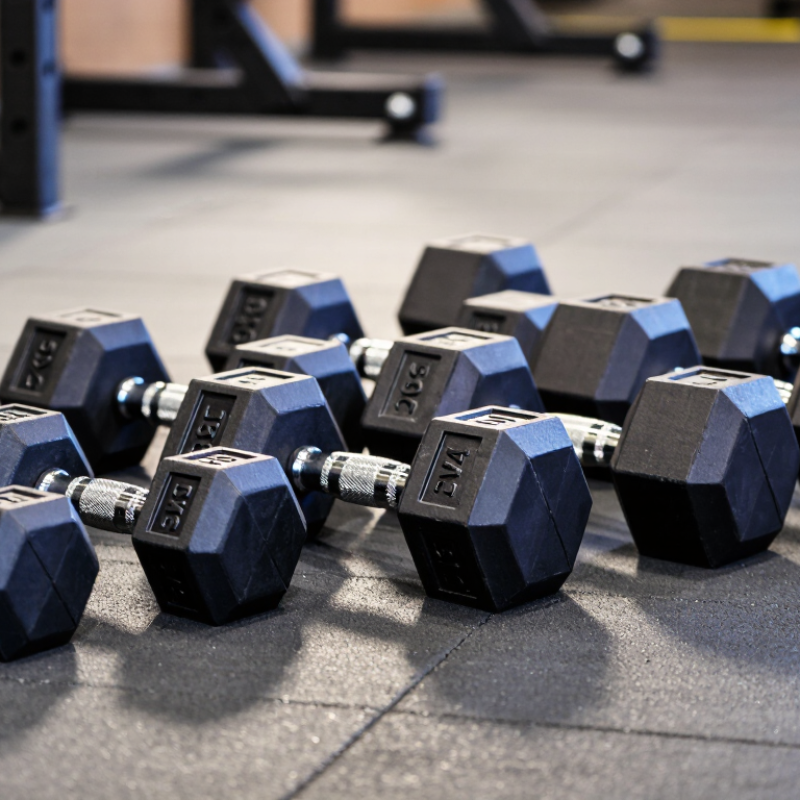
Tip: Define your rubber hex dumbbell requirements before contacting suppliers. Specify the weight range, increments, handle style, and surface finish. A home gym may need 2.5 to 30 kilograms, while a training facility may require heavier pairs. Hexagonal heads should sit firmly on rubber flooring without rolling. Small details matter.
Describe your expected training environment. Indoor studios need low-odor rubber and a comfortable, secure grip. Busy facilities need reinforced handles, accurate weight tolerance, and strong resistance to repeated drops. Ask for drawings, material specifications, inspection records, and sample units. In my sourcing experience, samples reveal problems that product photos hide. Check uneven coating, sharp edges, loose handles, and inconsistent logos or markings.
Tip: Turn performance needs into measurable requirements. Request a defined weight tolerance, such as plus or minus three percent, and confirm how it is tested. Review carton strength, pallet dimensions, storage conditions, and replacement procedures. These points affect total cost more than the unit price alone. I once focused too heavily on the lowest quotation and underestimated packaging damage. That decision needed rethinking. Require clear pre-shipment inspection steps, including random weighing and visual checks. Also confirm production capacity and realistic lead times. A supplier that answers precisely is usually easier to manage, but confident words still require evidence.
Sourcing rubber hex dumbbells requires more than comparing prices. Evaluate the supplier’s quality system, production experience, and manufacturing capacity before discussing large orders. Request recent inspection records, material specifications, and weight-tolerance data. Check whether the rubber compound resists cracking, strong odors, and floor staining. Small details matter.
Ask how long the factory has produced fitness equipment. Experienced teams usually understand handle knurling, head alignment, mold wear, and bonding problems. Request production samples from different batches, not only polished showroom pieces. Inspect the handle finish, hex shape, logo placement, and rubber surface under bright light. A reliable supplier should explain its incoming-material checks and final inspections clearly. Vague answers are warning signs.
Capacity needs practical verification. Review the number of molding machines, available shifts, warehouse space, and monthly output. Confirm whether the factory can maintain consistent weights during peak seasons. Ask for a production schedule, packing photographs, and a loading plan for your required quantities. Include drop testing and carton-strength checks in the quality agreement. I once trusted a sample too quickly; the bulk shipment showed uneven handle textures. That mistake was expensive. No audit is perfect. Factory visits, independent inspections, and repeat sampling still reduce uncertainty. Also examine communication speed, corrective-action records, and whether the supplier reports problems before shipment. A low quote means little if capacity, quality, or accountability cannot withstand real order pressure.
| No. | Evaluation Dimension | What to Verify | Recommended Benchmark or Acceptance Target | Evidence to Request | Risk Level |
|---|---|---|---|---|---|
| 1 | Rubber Compound Quality | Confirm the rubber type, hardness consistency, odor, surface finish, and resistance to cracking or peeling. | Request a defined hardness specification, typically around 70–85 Shore A for commercial dumbbell coatings, with agreed tolerance before production. | Material specification, approved pre-production sample, hardness test records, and independent laboratory report when required. | High |
| 2 | Metal Core and Handle Construction | Assess the steel core, handle diameter, knurling, weld-free construction, and connection between the handle and weight heads. | The handle should remain secure during repeated drops and normal commercial gym use, with no visible movement, sharp edges, or exposed metal defects. | Engineering drawings, core material declaration, dimensional inspection report, and sample-use evaluation. | High |
| 3 | Weight Accuracy | Check actual weight against the labeled weight across light, medium, and heavy sizes. | Agree a written tolerance before ordering; a commonly used purchasing target is within ±2% of the labeled weight, subject to the buyer’s specification. | Calibration certificates, production weighing records, and random third-party weight verification. | High |
| 4 | Dimensional Consistency | Compare head width, head diameter, handle length, handle diameter, and hexagonal contact surfaces across the full weight range. | Use approved drawings with dimensional tolerances; matched pairs should have consistent geometry and should sit steadily without rocking. | Technical drawings, control plans, first-article inspection report, and paired-sample measurements. | Medium |
| 5 | Durability and Drop Testing | Evaluate resistance to coating separation, cracking, deformation, and handle loosening after repeated impact. | Define a documented drop-test method, including drop height, surface type, number of impacts, and post-test acceptance criteria. | Test procedure, dated test videos or reports, retained samples, and post-test inspection results. | High |
| 6 | Odor and Chemical Compliance | Check for excessive rubber odor and verify compliance with chemical restrictions applicable to the destination market. | Products should meet the importer’s restricted-substance requirements and should not exhibit persistent, unusually strong odor after reasonable ventilation. | Material declarations, restricted-substance test reports, safety data where applicable, and packaging ventilation instructions. | High |
| 7 | Quality Management Experience | Review the supplier’s inspection system, defect classification, corrective-action process, and traceability. | A reliable supplier should use incoming, in-process, and final inspections, maintain lot records, and provide corrective-action reports for nonconformities. | Quality manual, inspection checklist, sample inspection report, nonconformance procedure, and audit findings. | High |
| 8 | Manufacturing Capacity | Verify whether molding, machining, coating, assembly, testing, and packaging are controlled in-house or through qualified subcontractors. | Capacity should cover the requested monthly volume without reducing inspection frequency or extending the agreed production schedule. | Production-line overview, equipment list, staffing plan, capacity calculation, and documented subcontractor controls. | High |
| 9 | Lead Time and Supply Continuity | Measure sample lead time, mass-production lead time, raw-material availability, and contingency planning. | Obtain separate confirmed timelines for sampling, approval, production, inspection, and shipment; require written notice for material or capacity changes. | Production schedule, historical on-time delivery data, raw-material plan, and business-continuity procedure. | Medium |
| 10 | Packaging, Loading, and After-Sales Support | Assess protection against abrasion, deformation, moisture, carton overload, and mixed-size shipping errors. | Packaging should protect coated surfaces and handles during transport, show clear quantity and weight markings, and include a defined claims and replacement process. | Packaging specification, carton drop-test results, loading photos, packing list template, warranty terms, and claims-response timeline. | Medium |
Purchasing note: Treat the benchmarks as starting points and include the final tolerances, test methods, inspection frequency, packaging requirements, and remedies for nonconforming products in the purchase agreement.
Sourcing rubber hex dumbbells starts with evidence, not glossy samples. The Health & Fitness Association reported 72.9 million U.S. fitness memberships in 2023, increasing equipment demand and supplier pressure. Verify the rubber type and recycled content. Ask for batch-specific certificates. Measure hardness using ASTM D2240 Shore A procedures. Request tensile strength and elongation results under ASTM D412. Check compression set with ASTM D395. Review heat-aging results under ISO 188. These tests reveal whether a coating will crack, flatten, or become slippery. Ask for odor and surface-finish records too. Small details matter.
Inspect the steel core, welds, and handle geometry. Confirm mass using calibrated scales with traceability to a national metrology system. Define an acceptable weight tolerance in the purchase specification. Test coating adhesion and inspect cut edges after repeated handling. Require controlled drop testing on realistic flooring, even when no single global dumbbell standard applies. ISO 20957-1 can support broader stationary fitness-equipment safety reviews, where applicable. Check packaging compression and moisture protection before shipment. I once accepted a visually perfect sample that developed a loose handle after repeated drops. The factory had tested appearance, not fatigue. That mistake was mine. Require photographs, raw data, sample retention, and corrective-action records for every production batch. Do not guess. A supplier’s confidence is useful, but independent verification is stronger.
Pricing should be compared by complete landed cost, not unit price alone. Request quotes for the dumbbell, packaging, molds, inspection, and delivery separately. A low offer may exclude carton reinforcement or protective wrapping. Ask whether prices change by weight range and order volume. Small differences become significant across a full container.
Minimum order quantities deserve careful attention. Some suppliers set one MOQ for each weight, while others accept mixed-weight orders. Confirm the required quantity per color, handle finish, and packaging type. A trial order of 100 pairs can reveal defects before a larger commitment. However, small orders often carry higher production costs. That trade-off is easy to underestimate.
Customization can include logo placement, handle texture, rubber color, weight markings, and carton design. Ask for digital artwork approval and a physical sample before production. Confirm whether mold fees are one-time charges or repeated for future orders. Request written tolerances for weight, dimensions, odor, and surface flaws. These details support consistent quality control. A factory audit, sample inspection, and production photos add useful evidence. Still, photos cannot replace independent inspection. I have seen attractive samples fail during packing, especially when cartons were too thin. Leave room for correction. Suppliers should explain lead times, replacement policies, and payment milestones clearly. Vague answers deserve another question.
Inspect production samples under bright light. Check hex corners, handle alignment, surface bubbles, rubber odor, and coating uniformity. Weigh several units against the agreed tolerance. Test grip hardness and marking durability after repeated handling. A polished sample can hide batch variation, so request samples from current production, not old stock. Record photos, measurements, carton dimensions, and approval dates. Small details become expensive disputes.
Confirm the logistics plan before negotiating the final price. The World Bank’s 2023 Logistics Performance Index collected 4,090 survey responses across 139 economies, highlighting customs, tracking, and shipment reliability as core performance factors. For sea freight, UNCTAD reports that over 80% of global merchandise trade by volume moves by sea. Ask the supplier for the correct HS classification, gross weight, pallet count, loading plan, and export documents. Confirm the Incoterms 2020 rule, port responsibilities, insurance, and delivery window in writing. Do not accept “shipping soon.”
Finalize terms around evidence, not promises. Use a signed specification sheet covering weight tolerance, rubber hardness, logo placement, packaging, and inspection rights. Link the balance payment to an independent pre-shipment inspection. Add remedies for shortages, damaged cartons, and nonconforming batches. Confirm warranty duration and replacement procedures. A clear 30/70 payment structure may protect cash flow, but it is not automatically safe. One weakness remains: inspection cannot measure every future failure. Keep retained samples, review the first container closely, and adjust the contract after real handling data.