How to Choose the Best Dumbbell Rack for Your Home Gym?
When setting up a home gym, the importance of a quality Dumbbell Rack cannot be overstated. According to fitness expert Mike Matthews, “A great dumbbell rack keeps your weights organized and accessible.” This reflects the essential role that a well-chosen rack plays in your workout space.
Choosing the best Dumbbell Rack requires careful consideration of your needs. You must assess the available space, the weight of your dumbbells, and your workout routines. A reliable rack not only saves space but also enhances safety by preventing clutter.
While many options exist, it’s easy to overlook critical features. Look for stability and durability in a rack to ensure it withstands heavy weights. Evaluate user reviews for practical insights. Remember, the perfect Dumbbell Rack should align with your fitness goals and lifestyle.
Understanding Different Types of Dumbbell Racks Available for Home Gyms
When selecting a dumbbell rack for your home gym, understanding the various types available is crucial. There are two main designs:
horizontal and
vertical racks.
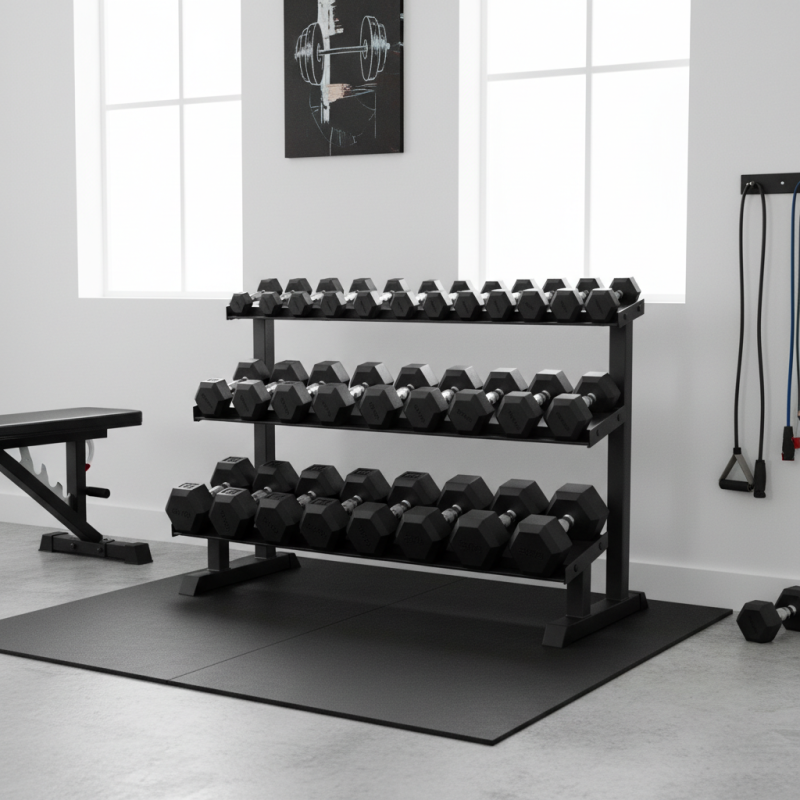
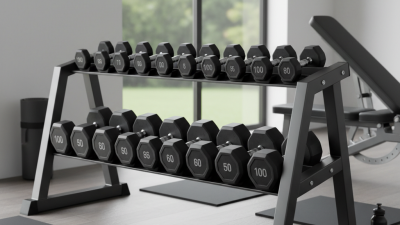
Horizontal racks lie parallel to the ground. They provide stability and easy access. However, they occupy more floor space. This could be a limitation in smaller home gyms.
Vertical racks, on the other hand, can save space. They store weights in an upright position. This design maximizes vertical space, fitting neatly into corners. However, accessing lower weights may require bending, which can be uncomfortable. Consider your workout routine and the weights you use most.
Another important factor is the materials used. Racks made from steel offer durability. Be cautious with plastic models; they may not withstand heavy use. Additionally, think about weight capacity. A rack must handle your dumbbell collection without bending or breaking. Ensure it matches your fitness plans.
Reflect on what type fits best with your available space and needs.
Assessing the Space: Measuring Your Home Gym for a Dumbbell Rack
When measuring your home gym for a dumbbell rack, accuracy is key. Begin by determining the available floor space. Clear the area where you plan to place the rack. This step ensures you can visualize the layout without obstacles. Use a measuring tape to get the dimensions of the space. Take note of the length, width, and height.
Consider the ceiling height in your home gym. A taller dumbbell rack may not fit well if your ceiling is low. An awkward fit can lead to safety issues or a cramped workout space. It's essential to balance aesthetics and functionality.
Tips: Mark the floor area with tape. This will give you a visual representation of the rack’s footprint. Ensure you have enough room to maneuver weights safely. Compare your measurements against different rack designs. Look for options that use vertical space efficiently. Sometimes a less prominent rack can work better in a small gym.
Take a moment to reflect on the layout you envision. The arrangement of equipment matters. It can affect your workout flow. If the space feels cluttered, reassess your configuration. Visualizing the final setup can help you make informed decisions. Careful planning leads to a more enjoyable workout environment.
How to Choose the Best Dumbbell Rack for Your Home Gym?
Weight Capacity: How to Choose a Rack That Supports Your Equipment
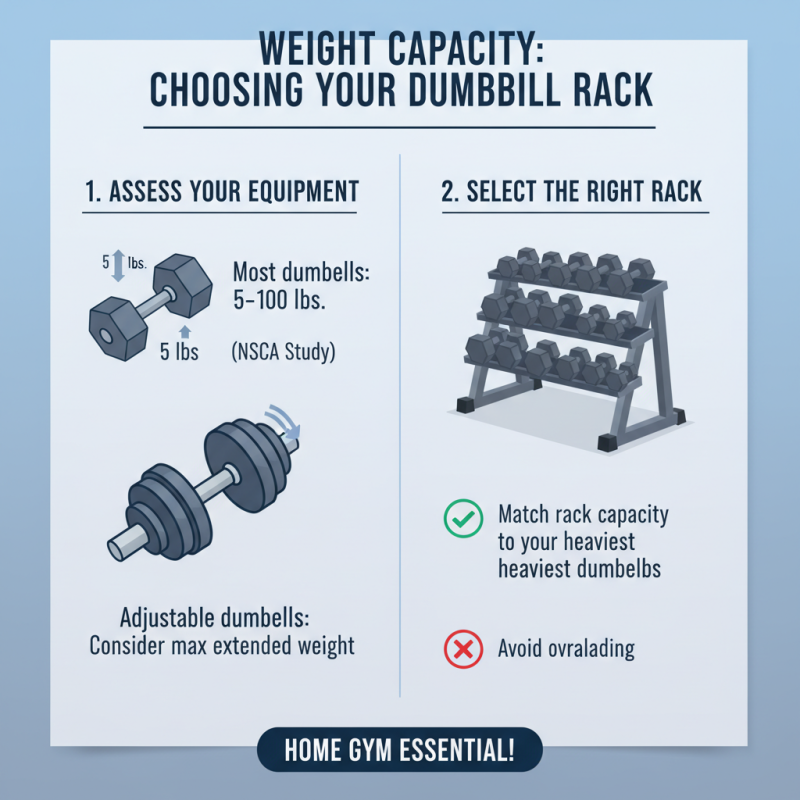
When selecting a dumbbell rack for your home gym, weight capacity is crucial. A study from the National Strength and Conditioning Association highlights that most dumbbells weigh between 5 to 100 pounds. Therefore, it’s essential to choose a rack that comfortably holds the maximum weight you plan to use. If you intend to use adjustable dumbbells, ensure the rack supports their weight when fully extended.
Many racks are rated based on their structural integrity. A rack that can hold at least 400 pounds tends to be a reliable choice. Make sure to check for any signs of instability, especially if you are placing multiple pairs of dumbbells on it. A well-constructed rack will often have a wider base for better stability.
Tips: Consider the floor space available in your gym. Measure the area where the rack will be placed. Opt for a design that fits both your weight requirements and your room's aesthetics.
Rethink the assembly process as well. Poor assembly can lead to safety issues. If you're unsure about securing the rack properly, consult with a professional. Prioritize quality over price; a cheap option may not support heavy loads effectively. Remember, the right choice enhances your workout experience.
Material and Construction: Selecting Durable and Stable Dumbbell Racks
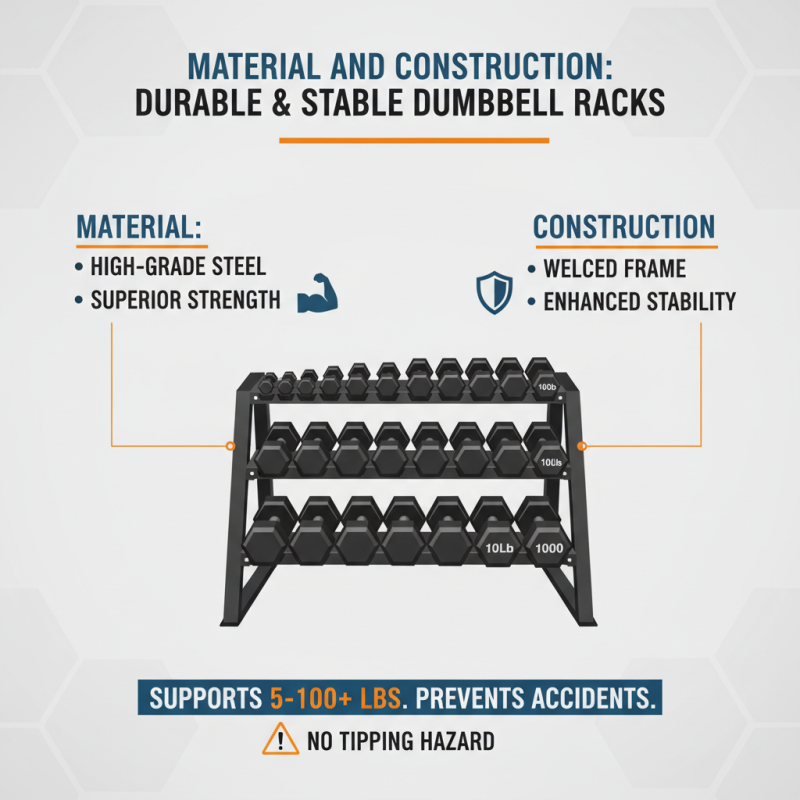
When selecting a dumbbell rack for your home gym, material and construction are crucial factors. Steel is often the preferred choice due to its strength and durability. According to industry reports, racks made from high-grade steel can support heavier weight loads without bending. This stability is essential when you consider that dumbbells typically range from 5 to 100 pounds or more. A well-constructed rack can even prevent accidents that may occur if it tips over under the weight.
Another key consideration is the rack's finish. Powder-coated racks resist scratches and rust, enhancing their longevity and appearance. A survey from a fitness equipment manufacturer indicated that racks with non-slip feet provide extra stability during use. The design also matters—horizontal racks often take up less space and can fit snugly against a wall, making them ideal for smaller areas. However, heavier vertical racks might offer better accessibility but require more room.
Reflecting on your gym's needs is vital. Some users prioritize aesthetic appeal over functionality, which can lead to dissatisfaction later. Ensuring the rack you choose aligns with your workout style can enhance your overall experience. A well-chosen dumbbell rack not only organizes space but also encourages consistency in your fitness journey.
Additional Features: What to Look for in a Functional Dumbbell Rack Design
When selecting a dumbbell rack for your home gym, consider its design and functionality. A good rack should fit your space. Look for compact designs if you have limited room. Adjustable racks can accommodate different dumbbell sizes. This feature offers versatility, especially for various workout routines.
Stability is crucial. A well-designed rack should have a solid base to prevent wobbling. Check for weight capacity; ensure it suits your collection. Some racks include safety features, like sections that prevent dumbbells from falling. This can be particularly important in high-intensity workouts.
A functional rack might also include added storage options. Shelves for accessories, like resistance bands or mats, enhance organization. Easy access can save time during workouts. However, avoid overly complex designs that may clutter the area. Reflect on your needs and space before choosing. A thoughtful choice can enhance your workout experience significantly.
How to Choose the Best Dumbbell Rack for Your Home Gym? - Additional Features: What to Look for in a Functional Dumbbell Rack Design
| Feature |
Description |
Importance Level |
Tips |
| Weight Capacity |
The maximum weight the rack can hold safely. |
High |
Choose a rack that can accommodate your current and future dumbbell weights. |
| Size and Footprint |
Dimensions of the rack and how much floor space it requires. |
Medium |
Measure your available space to ensure a good fit. |
| Material Quality |
Type of material used in construction for strength and durability. |
High |
Look for heavy-duty steel or a sturdy composite material. |
| Design and Aesthetics |
Overall look and feel of the dumbbell rack. |
Low |
Choose a design that complements your gym decor. |
| Storage Features |
Additional storage for accessories like bands or weights. |
Medium |
Look for integrated shelves or hooks for convenience. |
| Stability |
How well the rack stays upright and secure during use. |
High |
Check for rubber feet or a broad base for enhanced stability. |